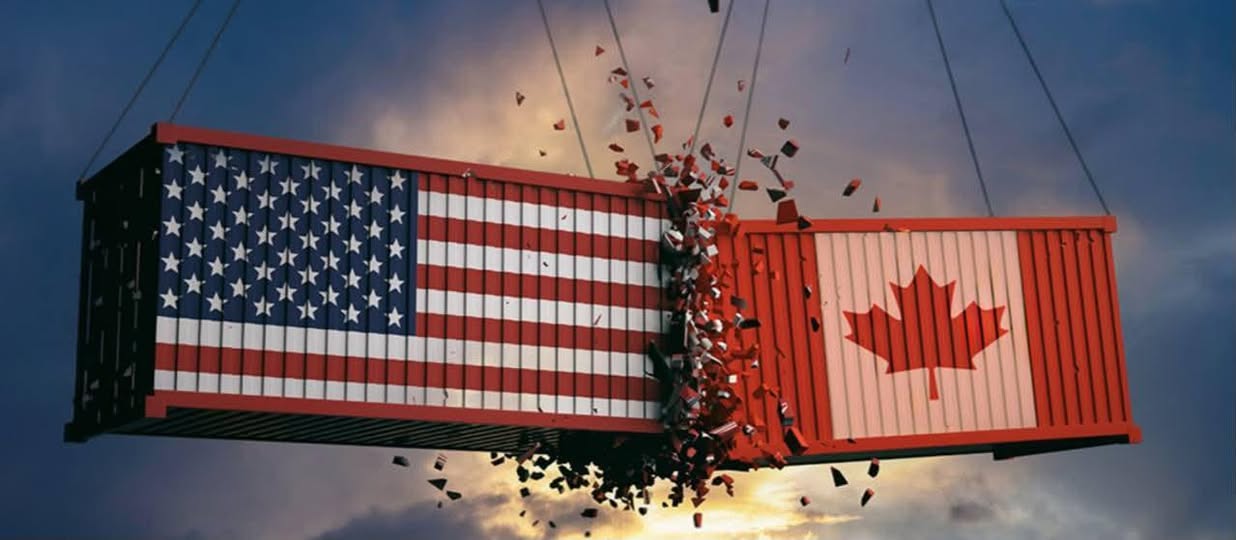
For decades, the United States maintained a global order built on a subtle, unspoken bargain that preserved a veneer of mutual respectability among its allies. The arrangement was straightforward: allies covered U.S. military costs and bought American debt, while Washington provided security guarantees and upheld financial stability; allies opened their markets to U.S. goods, and America offered security pledges in return. This system allowed the U.S. to project power and economic influence while maintaining the appearance of a partnership of equals. But under President Donald Trump’s second term, that facade has been stripped away, replaced by a transactional doctrine where failure to invest in the U.S. invites tariff sanctions, and reluctance to cooperate triggers coercion over energy and security.
The Old Bargain: Security for Stability
The post-World War II order rested on a series of reciprocal commitments that, while unequal in practice, were framed as mutually beneficial. South Korea, for example, hosted U.S. troops and contributed to their costs, while the U.S. extended its nuclear umbrella over the peninsula. In financial terms, allies like Japan and South Korea accumulated vast reserves of U.S. Treasury bonds, effectively financing American deficits in exchange for the dollar’s role as the global reserve currency. This dynamic was encapsulated in the phrase “you covered military costs while I provided security guarantees; you bought U.S. debt while I upheld financial stability; you opened your markets while I offered security pledges.”
The system worked because it was underpinned by a shared belief in American leadership as a public good. Even when the U.S. ran large trade deficits or pressed allies on burden-sharing, the underlying security and financial architecture remained stable. Allies accepted a degree of subordination because the alternative—strategic uncertainty and financial volatility—was worse.
The New Doctrine: Investment or Sanction
Trump’s approach dismantles this implicit contract. In 2025, his administration unveiled reciprocal tariffs on major trading partners, including a 25% duty on South Korean goods, framing the trade deficit as a structural economic and security challenge. The subsequent U.S.-Korea Strategic Trade and Investment Deal, finalized in November 2025, lowered tariffs to 15% but extracted a staggering $350 billion investment commitment from Seoul—$150 billion earmarked for U.S. shipbuilding and $200 billion for industries deemed critical to “economic and national security interests.”
When South Korea’s legislature delayed enacting the deal, Trump did not negotiate; he threatened. In January 2026, he announced via Truth Social that tariffs on South Korean autos, lumber, and pharmaceuticals would jump back to 25%, blaming Seoul’s parliament for “dragging its feet.” The message was clear: the old bargain of security for market access was dead; now, allies must invest directly in the U.S. economy or face punitive tariffs.
Energy and Security as Leverage
The coercion extends beyond trade. In October 2026, Trump pressed South Korea to invest in a $50 billion Alaska liquefied natural gas (LNG) project, warning that if Seoul did not commit, he would “double the amount” it would have to pay—presumably through higher tariffs or other charges. The Korean government pushed back, saying any investment could begin only after a review of its economic feasibility, but Trump’s threat underscored a new reality: energy projects are no longer commercial opportunities but instruments of geopolitical leverage.
This episode mirrors Trump’s tactics with Europe. As diesel prices hit record highs in the UK and Europe amid the ongoing Iran war and Strait of Hormuz closures, Trump threatened to ban U.S. diesel exports unless European allies released their strategic reserves. With the U.S. supplying 31% of the UK’s diesel imports and a significant share to Europe, the threat was not idle. Treasury Secretary Scott Bessent publicly urged Europe to “get ready to release some of their own diesel supplies immediately,” arguing that U.S. farmers and truckers “should not be left carrying the burden.”
Where once the U.S. guaranteed energy flows and security as part of its hegemonic role, now those guarantees are conditional on allies’ willingness to absorb economic pain for American benefit. The same logic applies to security: Trump has linked tariff relief to increased defense spending and equipment purchases, with Seoul agreeing to spend $25 billion on U.S. military hardware by 2030 and contribute an additional $33 billion to the cost of U.S. Forces Korea.
The Global Implications
The shift from a rules-based order to a transactional one has profound implications. For allies, it means navigating a landscape where long-standing security commitments can be weaponized for economic gain. For the global economy, it signals a move toward mercantilism, where states prioritize domestic industries and resource control over multilateral cooperation.
The U.S. intervention to support the yen in July 2026—selling euros to buy yen—underscores this new hierarchy. Washington acted not out of altruism but self-interest: Japan is a “net supplier of capital” to the U.S., while Europe is increasingly seen as a “net supplier of moral lectures.” In this calculus, allies are valued not for their strategic importance but for their financial utility.
The veneer of respectability that once cloaked American hegemony has been stripped away. What remains is a stark, transactional reality: invest in the U.S. or face tariffs; cooperate on energy and security or face coercion. For allies accustomed to the old bargain, the new order offers a harsh lesson: in Trump’s America, there are no partners, only customers and competitors.
From:Yim Sovanny